
Small, lightweight studs usually make the easiest everyday choice, while small hoops or huggies suit you better when you want more movement and visibility. Studs and hoops can both work well, but your routine helps narrow the choice.
For work, a simple pair can sit neatly with a polished outfit. During a commute, low-profile earrings may feel easier around bags, headphones, and hair. For casual outings, a small hoop can add a clear shape without feeling formal. Lightweight studs suit the widest range of daily routines.
Face shape can guide your choice, but comfort and personal taste matter more than face shape considerations. Your facial shape does not rule out any style; it can simply help you choose a look you enjoy.
Choose the pair you can wear comfortably through your most typical day, not just the outfit you have on now.
Key Takeaways
- Lightweight studs are a dependable choice for many daily routines.
- Small hoops and huggies add visible shape and movement.
- Consider where you work, commute, and spend casual time.
- Check fit, weight, and material before wearing a pair all day.
- Use face shape as a style guide, not a strict rule.
Studs vs Hoops for Everyday Wear
For the broadest range of everyday outfits, choose simple studs; pick a small hoop or huggie when you want more visible movement without a large silhouette. Simple studs are easy to pair, while small hoops bring more motion and shape.
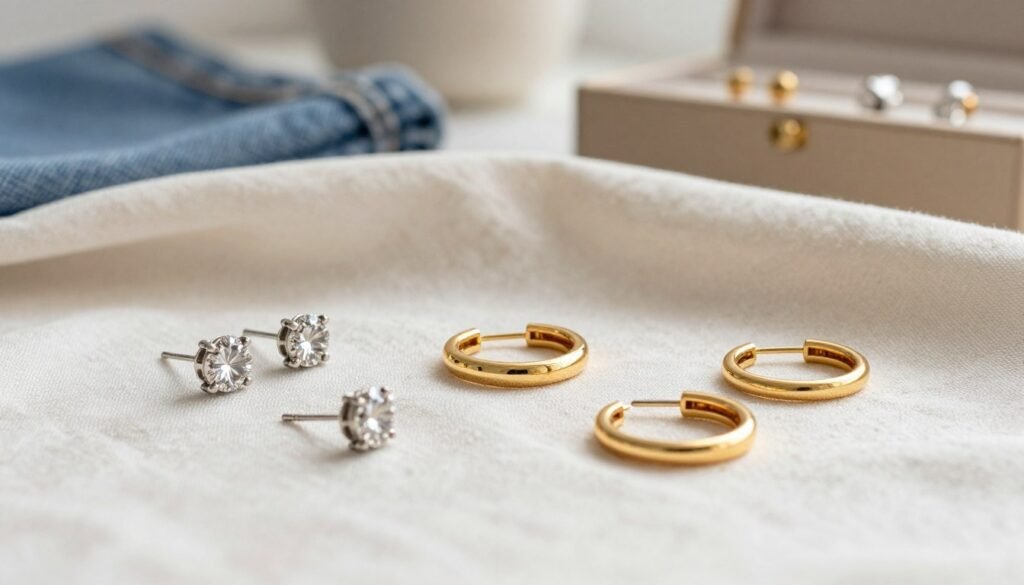
A stud uses a post and backing, while a hoop forms a loop through the piercing. A huggie is a close-fitting small hoop. These everyday earring styles come in designs for casual days and dressier settings.
When Studs Make Daily Dressing Easier
Classic studs stay close to the ear, so they draw less attention than a moving hoop. A plain metal dot or small stone can work with office clothes, weekend clothes, and patterned tops. That makes studs handy everyday jewelry when you want one pair for several outfits.
They are also easy to mix with other pieces. A small stud can sit beside a necklace or glasses without adding another strong shape. For jewelry styling, color and detail matter: a bright stone can stand out, while a plain finish blends in.
When Hoops Add More Presence
Hoops move as you turn your head and can make a simple outfit feel more finished. Small hoops offer a visible curve, while huggies keep that shape close to the lobe. Both styles suit casual outfits, and more detailed designs can work for dressier plans.
Size alone does not decide how noticeable an earring feels. A small hoop can be less obtrusive than a large decorative stud with a broad face. Think about the whole silhouette when you compare everyday wear comfort and daily wear comfort.
Choose the earring whose shape fits the day’s clothes and activity, not just the one that stands out most.
That simple check can make jewelry styling occasions easier to plan. One pair can suit routine errands, while another can add more detail to a dinner outfit.
| Style | Movement | Everyday setting | Useful fit check |
|---|---|---|---|
| Classic studs | Stay close to the ear | Work or a patterned shirt | Check that the face does not press the lobe |
| Small hoops | Swing lightly with head movement | Casual outings or a simple top | Check that the hoop clears the ear edge |
| Huggies | Move little when properly fitted | Commuting or routine errands | Check that the close curve does not pinch |
Keep one understated pair for routine days and a more noticeable option for occasions when you want your earrings to lead the look.
How Hoop Diameter and Earring Size Affect Fit
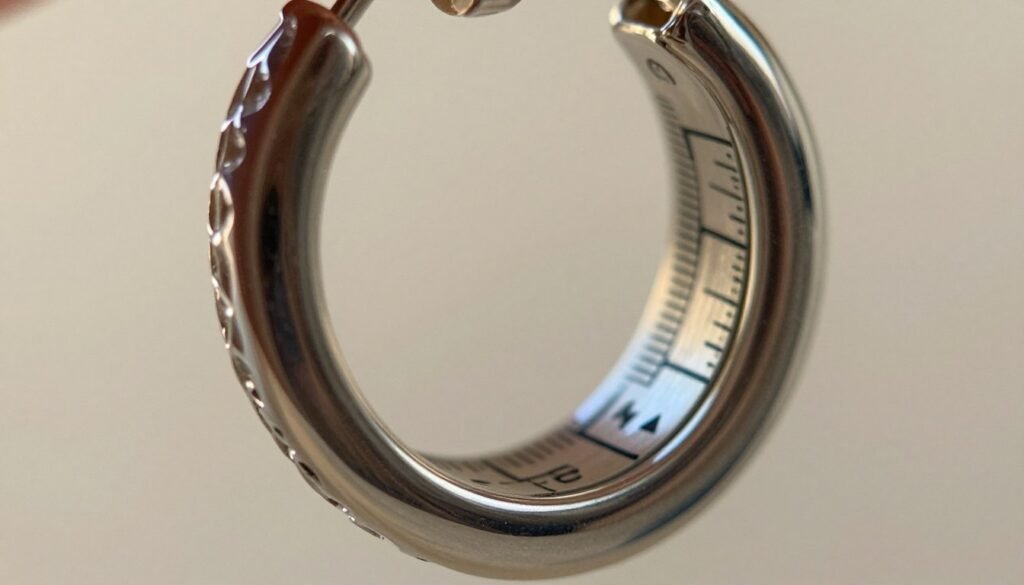
A hoop’s inner diameter, not its outside width, tells you how much open space the hoop will leave around your ear. Inner diameter is the distance across the inside of a hoop, measured from one inner edge to the other. Compare that space with your ear, not only with a product photo.
To check hoop diameter, measure from one inner edge to the other across the opening. Then compare the space with the visible gap between your piercing and the edge of your ear. Ear shape and hoop design can change how a listed size fits.
Read Hoop Diameter Before You Buy
These common ranges can help with jewelry sizing, but they are starting points rather than a promise of fit. The hoop’s curve and the piercing position also affect how much room remains.
| Style | Approximate inner diameter | Likely visual effect | Fit check |
|---|---|---|---|
| Huggie | About 8-12 mm | Close to the lobe | Check that the curve does not pinch |
| Small hoop | About 12-20 mm | A visible, compact loop | Compare the opening with the ear’s edge |
| Medium hoop | About 20-30 mm | A larger curve below the lobe | Check room for movement without pressure |
| Larger hoop | Above 30 mm | A more open, noticeable loop | Check whether hair or clothing can catch it |
Check Stud Scale and Post Fit
Stud size and fit depend on more than the face you see from the front. A broad stud face can cover more of the lobe, while a small face may look subtle. Earring size and fit also depend on the post length behind the ear.
Common earring posts are often 18 gauge or 20 gauge. The right piercing gauge depends on your piercing and the jewelry, so do not assume every post will fit. A heavier design may pull more on the lobe, making earring weight and jewelry weight part of the fit check.
Think about earring weight comfort as well as appearance. A compact solid stud can weigh more than a larger hollow hoop, so size alone does not tell you how an earring will feel.
Before ordering, compare the stated inner diameter with a hoop you already own that fits comfortably.
Which Earring Shapes Feel Comfortable All Day?
If you spend long hours at a desk, wear headphones, or sleep on your side, a lightweight stud is usually the more comfortable starting point. Low weight often matters more than a small-looking design. A lightweight stud puts less leverage on the earlobe than a long, swinging earring.
Comfort depends on earring weight and comfort, movement, and where the piercing sits. A large-looking hollow hoop may weigh less than a compact solid design. A hoop’s motion and weight can increase pressure on the piercing as you move through the day.
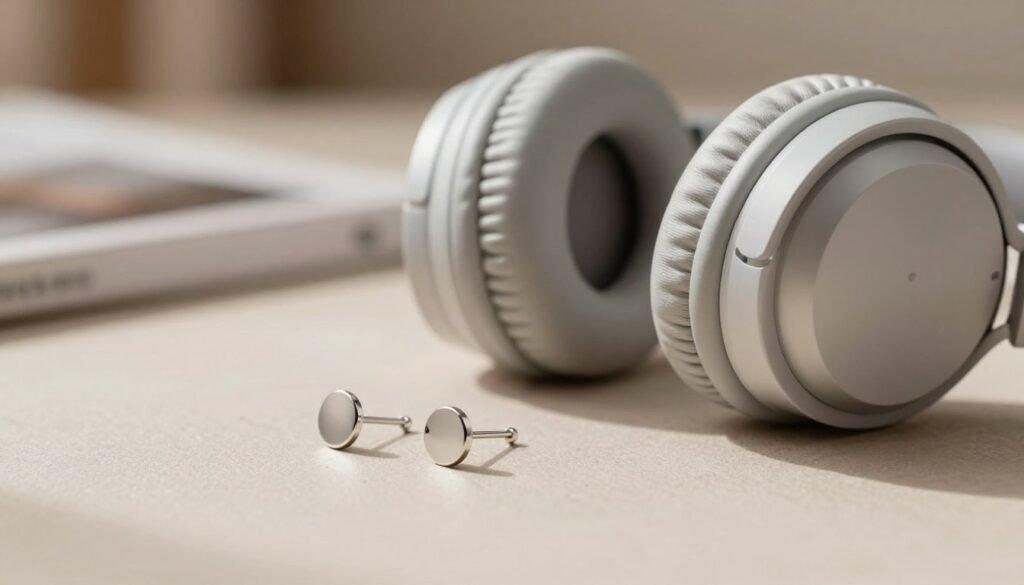
Long screen or desk time can make a post or backing noticeable when your head rests against a chair. Headphones may press on studs or push hoops toward the ear. A phone held against one ear can add pressure in the same spot.
An earlobe piercing and a cartilage piercing have different tissue and comfort needs. A piece that feels fine in a lobe may press against cartilage, where pressure can become distracting. Notice whether the jewelry moves, rubs, or catches during your usual tasks.
There are no comfortable earrings for sleeping that feel right for everyone. Sleeping comfort changes with your position, the earring’s shape, and your sensitivity. Removing jewelry for sleep may reduce pressure and snagging, especially if you sleep on your side.
Sleeping with earrings can also put pressure on the piercing when your ear rests against a pillow. A low-profile stud may feel less intrusive than a swinging piece, but no earring style is guaranteed to feel comfortable overnight.
Give your ears a break if a piece becomes uncomfortable during the day. If an earring leaves a sore spot or persistent indentation, take it out and reassess its weight and fit rather than wearing through the discomfort.
Earring Backings and Closures That Stay Secure
A closure is secure only when it is designed for that earring and fastens fully without pinching your ear. Match the closure to the post or hoop. A back should hold the earring in place without pressing painfully against your ear.
Earring backings work in different ways, so one backing type will not fit every post. Butterfly backs push onto a straight post. Screw backs thread onto a compatible post, while hinged hoop closures and lever backs use moving parts.
Check the earring closure types before putting a pair on. A post backing should slide or screw on as designed, and jewelry closures should close all the way. If a back feels too tight, it may cause pressure rather than secure the piece well.
| Closure type | How it fastens | Ease of putting it on | What to check before wearing |
|---|---|---|---|
| Butterfly back | Pushes onto a straight post | Slides on by hand | Check that it grips the post without pinching |
| Screw back | Threads onto a compatible post | Needs careful turning | Check that the post has matching threads |
| Hinged hoop | Closes with a hinged latch | Opens and clicks shut | Check that the latch sits fully in place |
| Lever back | A hinged arm secures the earring | Arm opens and closes by hand | Check that the arm rests firmly against its catch |
Post back earrings need a back made for their post style. Earring back styles can look alike but differ in how they attach, so do not force an ill-fitting piece.
Some earring post backs turn or slide during daily use. Check that the backing stays in place when you move your head, and make sure it does not press into the skin behind the ear.
After fastening a hinged hoop, gently check that its latch is fully seated before you leave home.
What Your Piercing Anatomy and Healing Stage Allow
A comfortable fit depends on your lobe’s thickness and piercing position, and a new piercing needs more care than a healed one. Your anatomy affects how jewelry sits. Do not change initial jewelry until the piercing has healed.
Earlobe piercing anatomy varies from person to person. A piercing near the edge may need a different shape than one set farther inward. Post length and gauge matter too, especially when swelling affects the room needed during early healing.
Fit Jewelry to Your Earlobe
For a settled lobe piercing, check that the post passes through without forcing it. Common earring posts are often 18 gauge or 20 gauge, but jewelry must match the piercing. Lobe piercing jewelry should not press into the lobe or hang at an uncomfortable angle.
These quick checks can help you assess lobe piercing anatomy and post fit:
- Confirm that the earring’s gauge matches the piercing.
- Check that the post length does not press into the lobe.
- Wait until healing is complete before changing initial jewelry.
- Follow the piercer’s aftercare instructions.
Wait for a Piercing to Heal Before Changing Jewelry
Earlobe piercing healing time commonly takes about 6-8 weeks, but that is an estimate, not a guarantee. Individual lobe healing can take longer. A piercing may still need care even after the usual piercing healing time has passed.
Good piercing aftercare means following the instructions given for your piercing, rather than testing new jewelry early. Jewelry change after piercing can irritate healing tissue. A qualified piercer can help if irritation, swelling, or discharge raises concern.
The same care applies to earlobe piercing and lobe piercing choices. Do not treat a date on the calendar as proof that the tissue has healed. If your piercing still feels tender, give it more time and ask a qualified piercer about it.
Do not change jewelry just because the usual healing estimate has passed if the piercing is still tender or irritated.
Which Earring Materials Suit Sensitive Skin?
If you have sensitive ears, identify the metal that touches your piercing rather than relying on a “hypoallergenic” label alone. Check the contact metal first. Nickel can trigger an allergic contact reaction in people with a nickel allergy.
Hypoallergenic metals are not a guarantee for every wearer. Titanium earrings and niobium are commonly chosen for sensitive piercings. Sterling silver marked 925 is another clear material label, but individual metal sensitivity still matters.
Metals to Consider for Sensitive Ears
Look closely at earring materials, including the post and any part that touches the piercing. Nickel exposure can cause itching, redness, or swelling in someone with a nickel allergy. Post irritation can also have other causes, so symptoms alone do not prove a metal allergy.
When checking jewelry materials, use this short list:
- Identify the base metal.
- Check for nickel disclosure.
- Ask what touches the piercing.
- Stop wearing a piece that causes a reaction.
Plated Finishes and Metal Sensitivity
Gold-filled earrings and gold vermeil earrings have different construction. Gold-filled jewelry has a layer of gold bonded to a base metal. Gold vermeil has a gold layer over sterling silver. Neither label alone guarantees that a piece will suit every wearer.
Gold vermeil earrings may have a different base from another layered piece, so the part touching your skin matters. A thin finish can also wear with use, exposing the metal beneath. Ask about the full construction if the listing only names the surface finish.
Metal allergies and jewelry metal allergies can involve nickel, but jewelry metal sensitivity may also have another cause. Hypoallergenic earring metals are a useful starting point, not a promise. Avoid a pair that causes irritation from nickel earrings or another suspected reaction.
If redness, itching, or swelling continues after you remove the jewelry, ask a healthcare professional for advice.
How to Match Earring Shapes to Your Face and Outfits
If you want a quick styling rule, choose an earring shape that either echoes or gently contrasts with your features. Balance is a guide, not a rulebook. No face shape makes one earring style unsuitable.
Round, oval, square, and heart-shaped are common face-shape descriptions. Face shape compatibility can help you picture a look, but face shape and earring style should fit your own taste. Comfort matters more than any chart.
Balance Earring Shape With Your Features
Vertical drops can add a longer visual line, while round or curved shapes echo softer lines. If your face shape is round, a longer line may create contrast. If your features look angular, a curved outline may feel softer.
These face shape and earrings ideas are options, not rules. Choosing earrings for face shape can help you explore a style, but facial shape and jewelry styling should not outweigh comfort or personal taste. A face-shape guide should never keep you from wearing a pair you enjoy.
Choose a Pair for the Occasion
Outfit details can guide your jewelry styling choices. A simple stud works well with a patterned shirt because it adds little visual clutter. A small hoop can suit a casual outfit, while a more noticeable shape can stand out against a simple neckline.
Face shape styling also changes with hair and clothes. A collar, scarf, or loose hair may cover part of an earring. Try a pair with the neckline and hairstyle you plan to wear before deciding how visible it feels.
Face shape considerations are useful when you want a fast way to compare shapes. Face shape and earring style remain personal choices, though. A favorite pair can suit your face even if a guide suggests a different outline.
Try the pair with your usual neckline and hairstyle before deciding that a face-shape rule suits you.
Care Habits That Prevent Irritation and Snagging
A small snag on a scarf or headphone cord can tug an earring before you notice it. Reduce the catch points in your routine. Remove earrings before changing clothes or using hair tools.
Hair, clothing, scarves, and headphone cords can all catch on jewelry. A low-profile shape can help during snag-prone tasks, while careful handling lowers the chance of a sudden pull. Check that each piece sits as intended before leaving home.
Hair spray, lotion, and leftover moisture can collect around jewelry. Clean earrings based on the metal and finish, or follow the maker’s care instructions. Alcohol, abrasives, and harsh cleaners may damage some finishes, so do not use them without guidance.
Check clasps and backs as part of earring care. Jewelry clasp security can change if a piece loosens, bends, or collects residue. Look at the closure before wearing the pair, and set aside jewelry that no longer fastens as it should.
Jewelry care instructions vary with the finish, so one cleaning method may not suit every piece. Use a soft, clean cloth when the maker recommends it. Keep water and product residue from sitting around the post and backing.
Irritation after a snag or tight fit may come from pressure on the skin. A metal reaction can also cause redness or itching, especially where the jewelry touches the piercing. Remove the earring and note whether the skin improves before wearing it again.
Jewelry care and routine checks can prevent small issues from becoming repeat problems. Store pairs separately so posts and hoops do not tangle or scratch one another.
Can You Wear Hoops in Cartilage Piercings?
You can wear a hoop in some healed cartilage piercings, but the piercing’s position and fit matter more than the style alone. Healing comes first, since cartilage piercings commonly take 6-12 months or longer to heal. A hoop that presses against the ear or catches on hair can still be unsuitable after healing.
Cartilage and lobe piercings may need different jewelry and gauge choices. A lobe earring does not automatically fit cartilage. Smaller hoops move less than larger hoops, but placement and healing stage determine whether cartilage hoops are suitable.
Cartilage piercing jewelry should match the location and the piercing itself. A hoop may sit differently in an upper ear than in another cartilage spot. The hoop’s movement can also change when you turn your head or brush your hair.
Use these checks before choosing cartilage earrings:
- Identify the cartilage piercing location.
- Confirm gauge and fit with a qualified piercer.
- Wait for full healing before changing initial jewelry.
Cartilage healing time depends on the piercing and the person. Cartilage piercings commonly take 6-12 months or longer, so do not use the shorter healing estimate for an earlobe as a guide.
A cartilage hoop can be unsuitable even after the piercing heals if its diameter presses against the ear or catches on hair. A tight fit may create pressure, while a hoop that moves sharply can tug on the piercing.
Do not judge a cartilage hoop by its size alone; its position and movement can make a healed piercing uncomfortable.
Ask your piercer to check the hoop’s fit if it presses against the ear or moves sharply when you turn your head.
Conclusion
If you want the simplest everyday choice, start with lightweight studs; choose a small hoop or huggie when you want more visible movement. Your everyday jewelry should feel comfortable, fit your piercing, and suit your skin.
For jewelry styling, compare a pair you already wear with the one you are considering. Notice its size, weight, and how it feels during a typical day. Before buying your next pair, compare its fit and weight with an earring you already know you can wear comfortably.